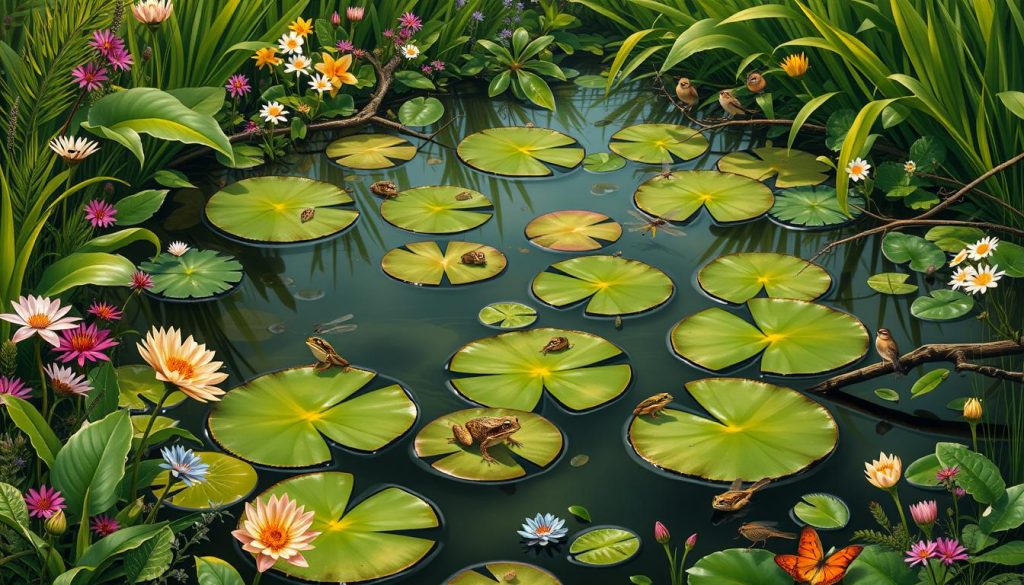
Did you know a single wildlife pond can support over 20 species of amphibians, insects, and birds? These small ecosystems are vital in a world where biodiversity is at risk. By adding a wildlife pond to my garden, I can turn my outdoor space into a lively haven for local wildlife. This not only enriches my environment but also my life.
Wildlife ponds are key refuges for declining species and play a big role in community conservation. The calming sounds of water also offer a much-needed break from daily life’s chaos.
The benefits of wildlife ponds go beyond looks; they support various species and boost my garden’s biodiversity. As I start creating a wildlife pond, I invite nature into my backyard. I also help preserve essential ecosystems that are rapidly disappearing.
Key Takeaways
- Wildlife ponds support numerous freshwater species, playing a vital role in biodiversity.
- Creating a wildlife pond enhances the aesthetic appeal of gardens and boosts property value.
- Maintaining clean water is key for a thriving pond ecosystem.
- Wildlife ponds can improve relaxation and reduce stress levels.
- Incorporating native plants further enhances the benefits of wildlife ponds.
- It’s possible to create a wildlife pond even in small spaces, making it accessible for many.
The Importance of Wildlife Ponds
Wildlife ponds are key for supporting a wide range of wildlife pond habitats. Sadly, half a million ponds have vanished in the last century. This makes conservation more urgent than ever. These ponds help connect people with nature, allowing communities to interact with local wildlife.
In cities, ponds act as vital stops for many species. They offer a safe haven in the midst of urban sprawl. Yet, one in five ponds is in bad shape, showing the need for wildlife pond conservation. These small habitats are home to seven native amphibians in the UK, like the common frog and great crested newt.
Wildlife ponds are not just for amphibians. They also provide water for foxes, hedgehogs, and birds. The benefits of wildlife ponds go beyond just water life. They help many animal species survive. Even small garden ponds, making up to 20% of shallow habitats, are vital for biodiversity.
Creating a wildlife pond is easy and doesn’t need to be expensive. A small solar pump can keep the water moving. This improves the pond’s look and health. The plants in the pond, like those that grow in deep water and near the edge, help keep the water clean and clear.
Benefits of Wildlife Ponds
Creating a wildlife pond has shown many benefits beyond just looking good. These ponds make any garden look amazing, turning it into a peaceful spot for relaxation. They also boost local biodiversity by attracting many species, helping to create a healthy ecosystem.
The benefits of pond biodiversity are huge. Ponds are key for amphibians like Great Crested Newts, whose numbers have dropped by 50% in 50 years. By having a pond, I help these species and attract insects and birds, making the area more lively.
Setting up a wildlife pond is vital in the fight against habitat loss in the UK. Over half of the UK’s ponds have vanished in the last 50 years. By adding a pond to my garden, I help in saving biodiversity and creating wildlife corridors.
Studies show that gardens with ponds can even increase in value. The mix of beauty, ecological benefits, and personal joy makes having a wildlife pond a great idea.
| Benefit | Description |
|---|---|
| Aesthetic Appeal | Enhances the visual beauty of the garden, providing a peaceful retreat. |
| Biodiversity Support | Attracts various species, including amphibians, insects, and birds. |
| Property Value Increase | Landscaped gardens with ponds often have higher property values. |
| Ecological Contribution | Helps combat habitat loss, promoting sustainability and conservation. |
Enhancing Biodiversity with a Wildlife Pond
A wildlife pond is more than a pretty garden feature. It plays a big role in boosting biodiversity. A well-made pond helps local wildlife by giving them homes. It’s not just about looks; it’s key for conservation too.
Supporting Various Species
Wildlife ponds help many species, making the ecosystem better. The pond should be 20–60 cm deep to support plants and animals. Bigger ponds attract more wildlife, showing how size matters for biodiversity.
Adding features like tall grass and a sunny spot is important. These help attract frogs and toads for breeding. It’s all about creating a welcoming space for nature.
Creating Habitats for Endangered Species
Wildlife ponds are vital for endangered species. They need careful design to be safe for animals. Features like gravel and stones help birds and insects drink safely.
Building ponds in autumn or winter is best. This way, they help vulnerable species and boost biodiversity. It’s all about creating a safe home for nature.
Wildlife Pond Advantages for Gardens
Adding a wildlife pond to my garden has many benefits. The calm waters and native plants make it beautiful. This beauty attracts local wildlife, making my garden more appealing.
Watching frogs, birds, and butterflies near the pond connects me to nature. It’s a special feeling.
Boosting Aesthetic Appeal
Wildlife ponds make gardens look better. As the pond grows, it becomes covered in plants. This creates a peaceful setting.
The sound of water and greenery attract wildlife. Ponds turn simple gardens into beautiful spots.
Improving Property Value
Wildlife ponds do more than just look good. They can make a house worth more by 5-10%. This is because well-kept gardens with ponds are attractive.
A pond adds to the garden’s value. It also creates a home for frogs, dragonflies, and birds.
Creating a Thriving Wildlife Pond Ecosystem
Starting a wildlife pond ecosystem needs careful planning and the right plants. Choosing native plants means less upkeep and supports local wildlife. These plants boost biodiversity and keep the pond balanced.
Keeping the water clean is also key for healthy life in the pond.
Choosing Native Plants for Sustainability
Using native plants for sustainability is essential for a wildlife pond. These plants thrive in local conditions with little help. Here are some good choices:
- Water lilies for oxygenation
- Watercress for natural filtration
- Duckweed to provide surface cover
- Reeds and grasses for wildlife shelter
Having 60-85% of the pond covered in plants in summer helps control temperature and algae. A ledge depth of about 20 cm is good for plants. Keeping 70% of the pond edges open and sunny helps plants grow and attracts wildlife.
Importance of Clean Water Sources
Having clean water is vital for a healthy pond. Rainwater is best, as tap water can harm plants and animals. Watch out for too much fertiliser, which can cause algae.
Keeping the water quality right is key to a successful pond. This means stopping pollution from farms nearby.
When creating a wildlife pond, having a water source nearby makes upkeep easier. Regular checks for dead leaves and algae help keep the pond lively.
| Aspect | Recommendation |
|---|---|
| Plant Selection | Native species adapted to local conditions |
| Water Source | Use rainwater, avoid tap water chemicals |
| Pond Surface Cover | 60-85% coverage in summer |
| Pond Edge Condition | At least 70% open and sunny |
| Ledge Depth for Aquatic Plants | Approximately 20 cm |
Wildlife Pond Maintenance Essentials
Keeping a wildlife pond healthy is key. By using seasonal maintenance, I help it stay a great home for many species. Good care boosts water quality and keeps wildlife coming back.
Seasonal Maintenance Strategies
Every season brings its own tasks for my pond. In spring, I clear out dead plants and debris to improve water and encourage new life. Summer is about watching the water level to keep all aquatic life happy.
Autumn means removing fallen leaves to stop them from harming oxygen levels. Winter is when I check for ice, as too much can harm fish and other creatures.
Dealing with Algae and Invasive Species
Stopping algae from taking over is a big job. I watch for signs of too much growth and act fast if needed. I also keep an eye out for invasive species that could upset the balance.
By choosing native plants and clean water sources, I help keep the pond diverse and safe. Taking care of my pond is a big job, but it’s worth it for the wildlife and the balance of nature.
Attracting Wildlife to Your Pond
To create a thriving wildlife pond, you need to plan carefully. Adding features like shelters and feeding stations helps attract different species. These elements provide safe spaces and encourage wildlife to interact with the pond.
Setting Up Shelters and Feeding Stations
Adding log piles or stones around the pond is great for amphibians and small mammals. Feeding stations with the right food attract birds and other wildlife. By placing these features thoughtfully, you make your pond a welcoming place for many species.
Using Native Plants Effectively
Choosing native plants is better for local ecosystems than non-native ones. They offer vital resources for wildlife and keep the ecosystem balanced. Covering about 50% of the pond with native plants helps control temperature and balance the environment. This careful selection makes your pond a vibrant home for various species.
| Feature | Description | Benefits |
|---|---|---|
| Shelters | Log piles and stones | Provide refuge for small mammals and amphibians |
| Feeding Stations | Bird feeders positioned near the pond | Attract various bird species |
| Native Plants | Plants that thrive in the local climate | Enhance biodiversity and provide vital resources |
| Pond Depth | Various depths up to 1 metre | Supports diverse aquatic life |
| Open Water | 10% to 30% of the surface area | Promotes oxygen circulation for aquatic plants |
How to Create Your Wildlife Pond
Creating a wildlife pond is more than just digging. It’s about careful planning and design. You need to think about size, location, and the plants you’ll use. A structured approach will help your pond thrive.
Planning and Design Considerations
Before starting my pond project, I considered a few key things:
- Size: Most ponds are under 2 hectares, making them easy to care for.
- Location: The pond should be downhill from water sources.
- Depth: Depths of 25-30 cm are good for ponds without fish, as they help with oxygen.
- Shapes: Irregular edges look natural and attract more wildlife.
- Variety: Different depths and pools attract more species.
- Plant Selection: Use native plants to cover up to two-thirds of the pond’s surface.
Step-by-Step Creation Process
My pond creation starts with picking the right spot and ends with the final touches. Here’s how I do it:
- Site Selection: Pick a spot that gets lots of sunlight, with less than 10% shade.
- Digging: Dig the area, making sure the banks are no steeper than 1:5.
- Lining: If your soil is tricky, use a liner to keep the water in.
- Planting: Plant a mix of native plants inside and around the pond.
- Final Touches: Make sure water flows well and add features like shallows for wildlife.
With time and care, your pond will become a self-sustaining ecosystem. It might take up to eighteen months to fully grow. Good design is key to a vibrant and diverse habitat.
Benefits of Pond Biodiversity
Wildlife ponds are full of life, which is great for the environment. They are home to many species, keeping the ecosystem healthy. It’s important to understand how ponds help our wildlife thrive.
Maintaining Ecosystem Balance
Wildlife ponds are key to keeping nature in balance. They support two-thirds of all freshwater life, more than rivers and lakes. This diversity helps clean the water and keeps pests under control.
Adding a pond to an area makes it more resilient. It helps different species adapt and live together better, making the environment more stable.
Importance for Environmental Health
Ponds are good for the planet too. They can hold 30 times more carbon than other places, helping fight climate change. Sadly, half of the ponds in the UK and Europe have disappeared in the last century.
Keeping ponds healthy is vital. They protect endangered species and help the environment. Healthy ponds support local wildlife and are essential for our planet’s health.
| Aspect | Details |
|---|---|
| Biodiversity Support | Ponds are home to two-thirds of all freshwater species. |
| Carbon Storage | Ponds can store up to 30 times more carbon than other habitats. |
| Ecosystem Services | They help purify water and control nutrient levels. |
| Global Amphibian Risk | Over 40% of global amphibian populations are at risk of extinction. |
| Pond Loss | Approximately 50% of ponds in the UK and Europe have disappeared in the past century. |
Wildlife Pond Conservation and Its Impacts
Wildlife pond conservation is key to keeping our ecosystems healthy. These ponds are homes for many species and help the environment. With fewer natural ponds, wildlife ponds are now vital for protecting habitats and biodiversity.
Role in Local Conservation Efforts
By joining wildlife pond conservation, I help protect our local water habitats. I can create new ponds, fix old ones, and keep ecosystems balanced. It’s important to make ponds big enough to attract frogs and other species.
Ponds need to be deep, at least 60cm, to keep amphibians warm in winter. This helps them survive the cold months.
Protecting Aquatic Habitats
Keeping water habitats safe is vital for a wide range of life. Wildlife ponds are homes for many creatures, like frogs and dragonflies. Activities like pond-dipping teach kids about ecosystems and food chains.
Regular care, best done in late autumn, keeps these habitats alive. This helps the ponds stay healthy for all the creatures living there.
| Conservation Activity | Impacts on Aquatic Habitats |
|---|---|
| Creating new wildlife ponds | Increases biodiversity and provides habitats for various species |
| Regular pond maintenance | Enhances water quality and prevents algal blooms |
| Educational activities | Promotes community awareness and engagement in conservation |
| Monitoring water quality | Ensures healthy ecosystems and sustainable wildlife populations |
Wildlife pond conservation brings people together for a common goal. It helps us all appreciate nature more and protect our water habitats better.
Community Engagement with Wildlife Ponds
Getting people involved with wildlife ponds is good for the environment and brings people closer together. Working with local schools and groups helps teach the importance of nature and saving it. This can inspire kids to help protect wildlife.
Involving Local Schools and Organisations
Teaming up with schools and groups leads to learning opportunities about wildlife ponds. These partnerships can include:
- Field trips to ponds for hands-on ecology lessons.
- Workshops on how to care for ponds and spot different species.
- Student projects on watching and recording local wildlife.
These activities help people understand nature better and encourage kids to help protect it.
Organising Community Clean-Up Events
Community clean-up days by wildlife ponds help the environment and bring people together. These events can include:
- Volunteers picking up trash and removing harmful plants.
- Working with local groups for help and resources.
- Teaching about the good of clean water and wildlife.
Being part of these events keeps ponds healthy and strengthens community ties. A clean environment is good for everyone and supports many animals.
| Activity | Benefits | Community Involvement |
|---|---|---|
| Field Trips | Hands-on learning about ecosystems | Local schools, teachers, students |
| Workshops | Practical skills in conservation | Local organisations, NGOs |
| Clean-Up Events | Improved pond health, enhanced wildlife | Community members, residents |
Financial Incentives for Creating Wildlife Ponds
Creating wildlife ponds boosts biodiversity and offers financial benefits. There are many funding options to help with the costs. These resources can make my garden more eco-friendly and save money in the long run.
Potential Funding Opportunities
The Sustainable Farming Incentive (SFI) scheme is a great resource for wildlife ponds. It offers up to £257 per pond per year, with a limit of three ponds per hectare. Ponds must be over 25 square metres and up to 2 hectares in size. The funding lasts for three years.
The Woodland Creation Planning Grant (WCPG) also provides financial help. It offers £1,500 for stage 1 requirements. The England Woodland Creation Offer (EWCO) helps with tree planting and maintenance for up to 15 years. These incentives can really help with my wildlife pond project.
Long-Term Cost Savings on Gardening
Creating a wildlife pond can save a lot of money in the long run. These ponds need little upkeep and add beauty to my garden. They also increase my property’s value and support local wildlife.
By using sustainable practices, I can cut down on gardening costs. This approach not only helps the environment but also saves money. It’s a win-win for both my garden and my wallet.
| Incentive | Maximum Funding | Eligible Size | Duration | Details |
|---|---|---|---|---|
| Sustainable Farming Incentive | £257 per pond/year | Over 25 m² – 2 ha | 3 years | Max 3 ponds per hectare |
| Woodland Creation Planning Grant | £1,500 (stage 1) | Minimum 5 ha | Variable | Funding for woodland design plan |
| England Woodland Creation Offer | Up to £10,200/hectare | Minimum 1 ha | 15 years | Covering capital costs and maintenance |
Creating a Wildlife-Friendly Garden
To make my garden better, I add features that help wildlife. Bug hotels and bird feeders attract many species. They give them homes and food, making my garden full of life.
Integrating Other Features: Bug Hotels and Bird Feeders
Bug hotels are great for insects like beetles and bees. They help pollinate my garden. Bird feeders, on the other hand, bring more birds to my yard, up to 20% more in peak seasons.
Designing Landscapes for Wildlife Habitats
Planning my garden carefully makes it a haven for wildlife. Long grass areas attract hedgehogs and frogs. Native flowers like lavender and bluebells are beautiful and help pollinators, making my garden more productive.
Challenges in Wildlife Pond Creation
Creating a wildlife pond has many benefits but also faces big challenges. Urbanisation can harm the area around the pond, leading to poor water quality and less biodiversity. It’s key to think about these issues when planning my pond to make it a good home for wildlife.
Addressing Urbanisation Impacts
Urban development makes creating a wildlife pond harder. Pollutants from asphalt and concrete can get into ponds. This can poison the water and harm the animals that live there.
To fight these problems, I need to add natural filters and plants around the pond. These help clean the water and make the pond a better place for wildlife.
Managing Pollution and Water Quality Issues
Keeping the pond clean is very important. Without fish, it can take 18 months for the pond to clean itself. I must watch the nutrients in the water to stop it getting too rich.
Too many nutrients can cause algae to grow and make it hard to see plants. Using native plants like reeds can help keep the water clear. This is good for the animals that live in the pond.
| Issue | Impact | Solution |
|---|---|---|
| Urbanisation | Increased pollution and habitat loss | Create buffer zones and natural filters |
| Nutrient Overload | Algal blooms and water quality decline | Monitor and manage organic materials |
| Water Quality | Threat to aquatic life health | Implement filtration plants like reeds |
By tackling the challenges of creating a wildlife pond, I can help make the environment healthier. Every step I take to manage pollution and deal with urbanisation helps restore nature’s balance.
Conclusion
Creating a wildlife pond brings many benefits. It’s not just about the beauty it adds to my garden. It also supports local wildlife, making me feel connected to nature.
Wildlife ponds play a big role in community conservation. They teach us about caring for our environment. This helps us work together to protect our natural habitats.
In short, having a wildlife pond is more than just making my garden look nice. It’s about taking care of our planet and keeping nature in balance. It shows us how important it is to live in harmony with the environment.
FAQ
What are the benefits of creating a wildlife pond in my garden?
How can I attract more wildlife to my pond?
What maintenance does a wildlife pond require?
Why is biodiversity in a wildlife pond essential?
What are the key features to consider when designing a wildlife pond?
How does a wildlife pond contribute to community conservation?
Are there any financial incentives available for creating a wildlife pond?
What are some challenges I might face when creating a wildlife pond?
Source Links
- 1
- Wildlife Pond Ideas: 8 Tips To Attract Nature To Your Garden
- 7 Benefits of Having A Garden Pond – Pond Guides | Pond Planet
- The Importance of Ponds | Northumberland Wildlife Trust
- The Importance of Wildlife Ponds and How To Build One : Pondkeeper is the leading UK pond supplies specialist.
- Layout 1
- Ponds
- All-new resource for creating garden wildlife ponds out now
- Wildlife ponds / RHS
- Ponds are good for biodiversity
- Wildlife Natural Pond Designs | World of Water
- Why you should add a pond to your garden – Gardens by Anna Butterfield
- How to build a wildlife pond
- Creating a small wildlife pond in the garden – Sustainable Holly
- Pond restoration and management | Suffolk Wildlife Trust
- Wildlife Pond
- Creating a Wildlife Pond In Your Landscape – The Conservation Foundation
- How to create a wildlife pond – experts share essential advice
- Garden ponds for wildlife | Suffolk Wildlife Trust
- Wildlife Pond Benefits for Biodiversity, Education & Wellbeing | Lost Habitat
- How does wildlife find garden ponds?
- Wildlife Natural Pond Designs | World of Water
- Create ponds and lakes – Farming
- Building a Wildlife Pond on your Land – Farming for Nature
- Mini ponds are ‘tiny universes’ of biodiversity for gardens and windowsills
- Ponds: a quick win for biodiversity
- Pond FAQs | Amphibian and Reptile Conservation
- Maintain and enhance ponds and lakes – Farming
- Pond Ecosystem Explained: Learn Its Role & Fascinating Facts
- Communal Benefits of Installing a Large Public Pond
- Biodiversity in the community May 2024_Layout 1
- Water and pond ecology
- WBD1: Manage ponds
- Woodland grants and incentives overview table
- FC Fact Sheet Biodiversity
- 6 Ways to Create a Wildlife-friendly Garden | Ark Wildlife UK
- Seven simple ways to create a wildlife-friendly garden
- 7 Top Tips for a Wildlife-Friendly Garden
- Wildlife Natural Pond Designs | World of Water
- Attenuation Ponds: Balancing Water Management and Environmental Protection – Enviroseal Lining Solutions – Lagoons, Reservoirs, Digestion Tank Liners
- The Vital Role Of Plants In Swimming Ponds
- Permaculture Pond: Create a Thriving Ecosystem