Slugs are one of those problems that never seem to go away.
You can do everything right — sow carefully, grow strong seedlings, plant them out at the perfect time — and then overnight, they’re gone.
That’s exactly why I wanted to test something different.
Instead of using traditional slug pellets, I tried a pet-safe, natural slug repellent to see if it could actually protect plants in real garden conditions — without harming wildlife, pets, or the soil itself.
👉 Watch the full test here:
In this video, I put the spray to the test overnight — the moment when slugs do the most damage — to see if it really holds up.
But the real value isn’t just in whether it worked or not… it’s in what it teaches about controlling slugs properly.
Why I Moved Away from Slug Pellets
At first, like most gardeners, I looked for the quickest fix.
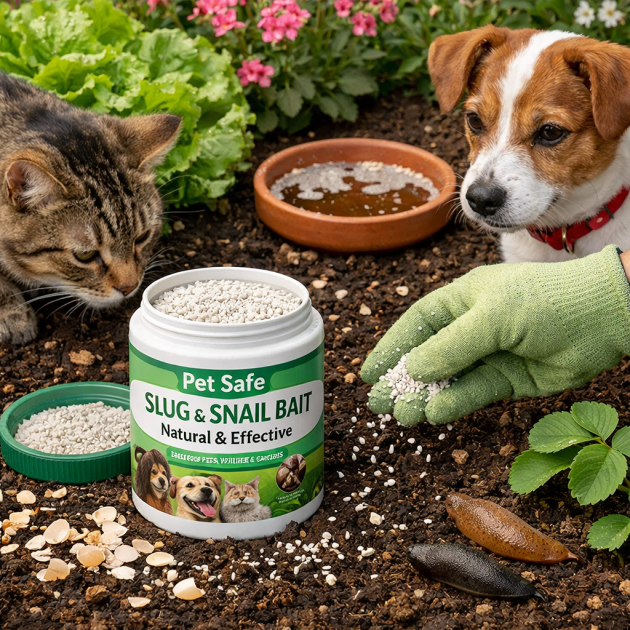
Slug pellets seem like the obvious answer. They’re easy, widely used, and promise fast results.
But over time, you start to notice the trade-offs.
They don’t just affect slugs — they can impact pets, birds, and beneficial wildlife. And once you start relying on them, you’re often stuck in a cycle of constantly needing more.
That’s when the mindset shifts.
Instead of trying to eliminate slugs completely, you start thinking about how to reduce damage naturally and sustainably.
The Thinking Behind a Natural Slug Spray
The spray I tested works on a simple idea.
Rather than killing slugs, it makes your plants less attractive to them.
Slugs rely heavily on scent and moisture to find food. Strong ingredients like garlic interfere with that, essentially masking the signal that tells them “this is food.” Adding something like peppermint oil strengthens that effect, creating an environment they’d rather avoid.
It’s not aggressive — and that’s the point.
You’re not trying to wipe them out. You’re trying to tip the balance in your favour.
The Overnight Test (Where Most Methods Fail)
There’s a big difference between something sounding good… and actually working.
So I stripped it right back.
One exposed seedling.
No barriers.
No backup protection.
Just the spray.
Left overnight — exactly when slug pressure is at its highest.
Because if something is going to fail, that’s when it will.
What This Test Really Shows
The result itself is interesting — but the bigger lesson is this:
👉 There is no single solution to slugs.
That’s where most gardeners get stuck. They try one thing, it works a bit (or not at all), and then they move on to the next “miracle fix.”
But the gardens that really succeed don’t rely on one method.
They build a system.
What Actually Works (When You Think Long-Term)
The biggest shift comes when you stop seeing slugs as something to eliminate, and start seeing them as something to manage.
That starts with the environment you create.
If your garden supports natural predators — frogs, beetles, birds, even hedgehogs — then you already have a form of control working for you. But those predators only stay if the garden gives them what they need. A slightly wild corner, a damp hiding spot, somewhere undisturbed — these small details make a big difference over time.
Then there’s protection at the right moments.
Young seedlings are always the most vulnerable. Giving them a bit of extra defence early on — whether that’s a barrier, a spray, or simply being more attentive — can be the difference between losing a plant and getting it established.
Timing also plays a bigger role than most people realise.
Slugs don’t operate on your schedule. They come out at night, in damp conditions, when everything is quiet. So if you’re reacting in the morning, you’re already too late. Acting in the evening, before they emerge, is where you start to gain an advantage.
And then there’s moisture.
If your garden stays damp overnight, you’re creating the perfect conditions for slugs to thrive. Even small changes — like watering earlier in the day — can reduce how active they are.
The Bigger Picture (This Is Where Most People Win or Lose)
This test reinforced something important:
👉 Slug control isn’t about one trick — it’s about stacking small advantages.
A spray helps.
Better timing helps.
Encouraging wildlife helps.
On their own, they’re limited.
Together, they’re powerful.
Want a Stronger, Pet-Safe Approach?
If you want to take this further, I’ve also put together a full guide on making and using a pet-safe slug spray, including why each ingredient works and how to apply it properly:
👉 https://youtu.be/rVrzaNxFQIg
This pairs perfectly with the test video — one shows the theory and setup, the other shows real-world results.
Final Thoughts
There isn’t a perfect, one-size-fits-all solution to slugs.
But there is a better way to approach them.
Not by trying to eliminate them overnight…
but by gradually shifting your garden in your favour.
That’s when things start to change.
Watch the Full Test
If you want to see exactly what happened overnight and how effective the spray really was:
👉 https://youtu.be/6umHdK7CiVc
Let Me Know
Have you tried natural slug control methods?
Have they worked — or have you had the same experience most gardeners do?
Drop a comment on the video — this is one of those topics where real-world results matter more than anything.