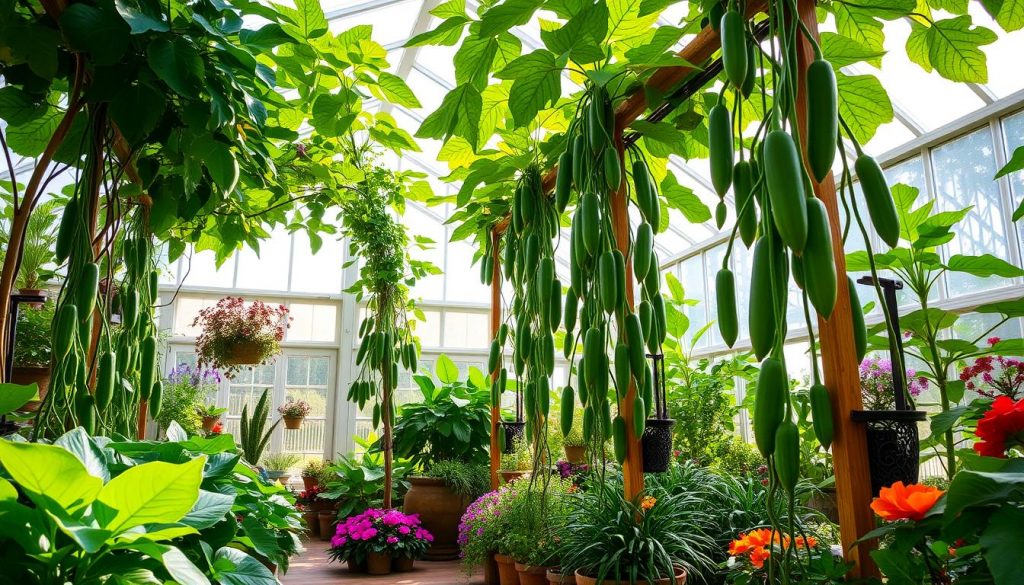
Did you know cucumbers need a warm start to grow? They need at least 20ºC (68ºF) to germinate. This makes conservatory gardening perfect for growing cucumbers. You can enjoy fresh cucumbers from your own garden.
Growing cucumbers in a conservatory is rewarding and easy if you follow the right steps. They start to grow in 7-10 days. After that, they can be ready to eat in about 12 weeks. This guide will help you understand the benefits, how to grow them, and some challenges you might face.
Key Takeaways
- Cucumbers thrive in warm conditions ideal for conservatory gardening.
- It takes 7-10 days for cucumber seeds to germinate.
- Harvesting cucumbers regularly can extend the growing season and boost yield.
- Prepare your conservatory with the right temperature and light for successful cucumber cultivation.
- Different cucumber varieties offer unique benefits; choose based on your needs.
Why Choose to Grow Cucumbers in a Conservatory?
Growing cucumbers in a conservatory has many benefits of growing cucumbers. It offers a controlled space that’s perfect for these delicate plants. This means better results than growing them outside.
One big plus is the ability to control the temperature. Cucumbers need a warm spot, at least 15°C, to grow well. In a conservatory, you can keep the temperature just right, around 21°C. This warmth helps them grow faster and stronger, leading to more cucumbers.
Another benefit is less chance of pests. Aphids and cucumber beetles are less of a problem inside a solid glass or polycarbonate space. This means healthier plants and less worry for me.
The conservatory also lets cucumbers grow longer than they can outside. While outdoor growing is limited by the seasons, a conservatory can extend the growing season. This means cucumbers can thrive from mid-summer to early autumn, sometimes even into October. This gives me fresh cucumbers for longer, making my cooking and salads even better.
In summary, growing cucumbers in a conservatory is a great choice. It combines warmth, protection, and a longer growing season. It’s perfect for anyone who loves gardening.
What Are the Best Cucumber Varieties for a Conservatory?
Choosing the right cucumber varieties for a conservatory is key to success. Greenhouse cucumbers love the warm, humid air of conservatories. F1 Bella is a top pick, with all-female flowers and long, straight cucumbers. Mini Munch is also great, giving small, tasty cucumbers perfect for snacking.
While focusing on greenhouse cucumbers, some outdoor types like Crystal Lemon and Burpless Tasty Green also do well in conservatories. But, be careful not to mix them, as it can mess up the fruit quality.
Today’s cucumber varieties are better at fighting diseases than before. This means I don’t have to constantly check for male flowers. Modern all-female types make growing cucumbers much easier and more productive.
Small-fruited cucumbers can produce one to three cucumbers a day in summer. With the right care, like transplanting and keeping humidity up, they offer a constant supply of fresh cucumbers.
can you grow cucumbers in a conservatory
Yes, you can grow cucumbers indoors in a conservatory. This setup is perfect for those who love gardening. The conservatory’s warmth and humidity are just right for cucumbers. By controlling temperature and moisture, I create the best conditions for my plants to grow well.
My conservatory has become a mini-greenhouse, a great place for seedlings and crops. To start, I needed pots, saucers, good compost, and seeds. I reused old pots and trays, and even got new compost bins to make my own compost.
This year’s weather was tough, with long frosts and dry spells. I grew tomatoes, cucumbers, and peppers in my conservatory and a greenhouse. Both places had similar success with seed germination, but some seeds took longer to grow.
It’s important to have good ventilation to avoid dampness and mould. Cucumbers need a lot of water, about two to three litres per square foot. I plant cucumber seeds 1cm to 2cm deep.
Pruning side shoots when they’re about 60cm tall helps cucumbers grow stronger and produce more. Keeping the conservatory warm, between 21°C and 29°C, is key. Humidity should be between 60% and 80% for healthy plants.
Using hydroponics and vertical gardening increases my yield. Indoor cucumbers can produce up to 50% more than those grown outside. Growing cucumbers in my conservatory is very rewarding and keeps my gardening passion alive.
Preparing Your Conservatory for Cucumber Cultivation
Starting cucumber gardening in your conservatory needs careful preparation. First, I clean the area well to get rid of pests. This makes a good home for my plants. Cucumbers love bright light, so I make sure they get plenty of sun.
Keeping the right temperature is key. Cucumbers need at least 20ºC to grow from seed. If it’s cold, I use heating mats or blankets. I also make sure there’s good air flow to stop mildew.
Preparing the soil is fun too. I mix in compost or manure to keep it moist and full of nutrients. This helps my cucumbers grow well and produce lots of fruit. I give them enough space, about 18 inches apart, to grow.
By focusing on these details, I create the best place for my cucumbers to grow. This careful planning helps them grow strong and healthy.
| Preparation Aspect | Recommended Action |
|---|---|
| Cleaning | Thoroughly clean the space to remove pests. |
| Sunlight | Ensure maximum natural light access. |
| Temperature | Maintain at least 20ºC for germination. |
| Ventilation | Open windows or use fans to control humidity. |
| Soil Enrichment | Add compost or well-rotted manure. |
| Spacing | Space plants 18 inches apart. |
How to Sow Cucumber Seeds in Your Conservatory
Getting cucumber seeds right is key for a good harvest. I use peat-free, multi-purpose compost for this. It’s perfect for cucumbers to grow well. I plant the seeds vertically in 7.5 cm pots, 1-2 cm deep.
This helps them get warm, which helps them grow. Germination usually takes 7-10 days at 20°C.
Optimal Soil and Compost for Cucumbers
The right soil is vital for cucumber plants. They need a mix that drains well but holds moisture. Peat-free compost is great for this.
Here’s what makes up the mix:
| Component | Benefit |
|---|---|
| Peat-free compost | Rich in nutrients |
| Perlite | Improves drainage |
| Worm castings | Enhances soil fertility |
| Compost | Adds organic matter |
Dangers of Overwatering
Watering cucumbers needs care. They like moist soil but too much water harms them. I check the soil often to keep it just right.
Watering in the morning helps. This way, the soil can soak up the water before it gets hot. This keeps cucumbers healthy and growing well.
Caring for Your Cucumber Plants
Looking after cucumber plants is key to a good harvest. It’s important to know how to water them right and keep the humidity in check. Also, giving them the right food through fertilising is vital. These steps help my cucumbers grow well and taste great.
Watering and Humidity Control
Watering cucumbers regularly is a must, more so in hot weather. They love moist soil, so I mulch around them to keep it that way. It’s vital to watch the water levels to avoid stem rot. The soil should be moist but not soggy.
Keeping humidity levels right is also important to stop diseases like powdery mildew. I keep an eye on the humidity and adjust it to prevent fungal infections. Using plant halos helps water reach the roots effectively.
Feeding Your Cucumber Plants
As my cucumbers grow, I make sure to feed them well. I use a balanced fertiliser every two weeks, starting when the fruit grows. It’s important to avoid fertilisers high in potash, as they can spoil the taste. Proper nutrition means a bountiful harvest for me.
| Aspect | Details |
|---|---|
| Watering Frequency | Regularly, more often in warm weather |
| Soil Conditions | Moist but well-drained for best growth |
| Humidity Requirements | Moderate levels to avoid disease |
| Fertiliser Application | Every two weeks with balanced fertiliser |
How to Support Cucumber Plants in a Conservatory
Supporting cucumber plants is key to their growth and success. Trellising them lets them grow up, improving air flow and reducing disease risk. This support helps my plants grow strong and healthy, leading to great harvests.
There are many ways to support cucumbers. I use bamboo canes, trellises, or netting to help them climb. This method makes the plants bushier and more fruitful, giving me more cucumbers.
Using a trellis or other support has many benefits. For instance, cucumbers grown up can be 45cm apart, giving them more room to grow. This is better than the 90cm spacing needed for ground planting, saving space in my conservatory.
Trellising cucumbers also helps prevent misshapen fruits. These plants grow straighter, making picking easier and more fun. Plus, they’re less likely to get sick because of better air flow and less moisture.
| Support Method | Benefits |
|---|---|
| Bamboo Canes | Simple, cost-effective support for climbing plants |
| Trellis | Enhances vertical growth, prevents disease |
| Netting | Provides a flexible support option for various growth habits |
Growing cucumbers vertically is rewarding, knowing it boosts my conservatory’s success. The right support and care lead to healthy plants and plenty of cucumbers. Whether making DIY trellises or finding other creative ways, the benefits of supporting cucumbers are huge.
Common Pests and Problems When Growing Cucumbers
Growing cucumbers in the conservatory means keeping an eye out for pests. Spotting problems early is key to keeping your cucumbers healthy. Regular checks help me catch any signs of trouble quickly.
Identifying and Managing Diseases
Many pests can harm cucumbers, affecting their health and yield. For example, cucumber beetles can spread bacterial wilt, a serious disease. Greenflies can also cause problems, but using companion plants can help control them.
Powdery mildew is another disease to watch out for, often appearing late in the season. Keeping the air moist and circulating can help prevent it. Blossom end rot can also occur if cucumbers don’t get enough water or nutrients. Proper watering and feeding can fix this issue.
Nutrient deficiencies can also cause problems. Yellow or brown leaves might mean your plants need more nutrients. Regular watering and feeding can solve this. It’s also important to plant cucumbers far enough apart to improve air circulation and reduce disease.
To deal with pests like red spider mites and pickleworms, I use a mix of methods. Natural treatments like Bacillus thuringiensis and Spinosad are very helpful. Handpicking pests is another effective way to manage them.
| Pest/Disease | Signs/Symptoms | Management Techniques |
|---|---|---|
| Cucumber Beetle | Visible beetles, wilting, yellowing leaves | Regular inspections, handpicking, companion planting |
| Powdery Mildew | White powdery spots on leaves | Improve airflow, maintain humidity levels |
| Blossom End Rot | Rotting at the fruit’s tip | Ensure consistent moisture, adequate feeding |
| Cucumber Mosaic Virus | Discolouration and distortion of leaves | Remove infected plants, control aphids |
| Red Spider Mite | Webbing on foliage, stippling | Regular monitoring, appropriate insecticidal soaps |
Keeping a close eye on your cucumbers and taking action early can lead to a successful harvest. By being proactive, I can enjoy a healthy crop all season long.
Harvesting Cucumbers from Your Conservatory
Harvesting cucumbers at the right time is key for the best taste and texture. I start picking around 12 weeks after planting, when they’re just right. Knowing when to pick is vital for quality and quantity.
Regular picking boosts the plant’s output and extends the growing season. It’s a win-win for both the plant and the fruit.
When to Harvest for Best Results
Understanding how to pick cucumbers is essential for success. For slicing cucumbers like Marketmore 76, aim for 8 to 10 inches. Pickling cucumbers, like Boston Pickling, should be 4 to 6 inches long to avoid bitterness.
Each variety has its own timing. Slicing cucumbers take 60 to 70 days, while pickling ones can be ready in 52 days.
Harvesting in the morning is best. The cooler weather keeps cucumbers crisp. Using sharp secateurs helps avoid damaging the plant. This way, cucumbers taste better and add joy to our meals.
| Cucumber Variety | Maturity Time (Days) | Harvest Length |
|---|---|---|
| Marketmore 76 | 70 | 8-10 inches |
| English Chelsea Prize | 60 | 8-10 inches |
| Boston Pickling | 52 | 4-6 inches |
| Honey Plus Hybrid | 40 | 7-9 cm |
| Party Time | N/A | Varies |
By timing and technique, we get the best cucumbers. Enjoying them fresh from our conservatory is a treat.
Storing and Using Homegrown Cucumbers
There’s nothing quite like enjoying the fruits of my labour, like freshly harvested cucumbers. Keeping cucumbers right is key to keeping them fresh and tasty. For a short time, they can stay in the fridge, staying crisp for about a week.
For longer storage, smaller cucumbers are great for pickling. This method not only extends their life but also adds new flavours to my meals. Using fresh cucumbers in cucumber recipes lets me enjoy my harvest fully.
Some of my favourite ways to use cucumbers include:
- Crisp salads with a mix of greens and herbs.
- Refreshing sandwiches, perfect for a summer lunch.
- Delicious dips, like tzatziki, that pair wonderfully with crisp veggies.
Cucumbers are very versatile in the kitchen. By trying different uses, I can make them taste better and add variety to my dishes. Here’s a simple table showing how to store and use cucumbers:
| Storage Method | Duration | Usage Ideas |
|---|---|---|
| Refrigeration | Up to 1 week | Salads, sandwiches |
| Pickling | Several months | Snacks, side dishes |
| Freezing (blanched) | 6-12 months | Soups, smoothies |
Using my homegrown cucumbers fully has become a joy. From the garden to my plate, they make my meals better and help me stay healthy. Learning how to store cucumbers lets me enjoy them all year round.
Conclusion
Growing cucumbers in a conservatory is a rewarding experience. It combines gardening skills with the joy of eating homegrown food. By spending time planning and caring for my cucumber plants, I get to enjoy the many benefits of growing cucumbers.
A conservatory is a great place to learn and improve your gardening. Even with challenges like wet weather and low germination, making small changes helps a lot. For example, controlling humidity and airflow can greatly improve growth.
My journey with growing cucumbers has made me a better gardener. It also gives me fresh, tasty cucumbers to enjoy. With each season, I aim to get better at growing cucumbers in my conservatory.
FAQ
Can I grow cucumbers all year round in my conservatory?
Yes, you can grow cucumbers all year in a conservatory. It keeps a steady temperature and humidity, perfect for cucumbers. Just make sure to adjust the light in winter.
How do I prevent pests from infesting my cucumber plants?
To stop pests, check your cucumbers often for signs of trouble. Use plants that help each other, keep air moving, and try natural pest control.
What is the best way to ensure my cucumbers are healthy?
Keep cucumbers healthy by giving them the right water, humidity, and food. Watch for diseases and pests, and use good care like support and feeding.
Can I grow outdoor cucumber varieties in my conservatory?
Yes, you can grow outdoor types like ‘Crystal Lemon’ and ‘Burpless Tasty Green’ in your conservatory. But, don’t mix them with other types to avoid pollination problems.
How should I water my cucumber plants?
Water cucumbers regularly to keep the soil just right. Water in the morning to avoid too much humidity, which can cause disease.
When is the best time to harvest cucumbers?
Harvest cucumbers about 12 weeks after planting, when they’re the right size. Regular picking helps the plant grow more and keeps the taste and texture good.
Are there specific recipes to try with my homegrown cucumbers?
Definitely! Use your cucumbers in salads, sandwiches, dips like tzatziki, or pickle them for later. Their fresh taste makes them great in many dishes.
Source Links
- How to grow cucumbers
- How to Grow Cucumbers – Greenhouse & Outdoor Growing Guide
- Grow your own cucumber – how to
- How to grow cucumbers – a simple guide to growing them in pots
- Cucumbers
- How to grow cucumbers in a greenhouse – Plantura
- Growing Cucumbers – by Bob Flowerdew
- Cucumber Plants: UK Grown, Healthy & Delicious
- How to grow aubergines, peppers, cucumbers, squashes and other fruitin
- Using a conservatory as a greenhouse
- 15 Vegetables To Grow In A Greenhouse | Alitex
- ‘Ridge Perfection’ Cucumber Plants
- Give cucumbers enough heat and moisture, says Monty Don
- Growing Cucumbers . . . helpful information and advice
- How to Grow Cucumbers